Don’t waste the crisis



South Africa is experiencing its third energy crisis of this decade. While electricity loadshedding has been a threat for far longer, the most extreme phase was definitely during 2022 and 2023, when protracted power cuts were a daily, sometimes twice daily, misery.
That confidence-sapping period was fully self-inflicted and avoidable, but policy uncertainty, asset mismanagement, project delays and deep-seated corruption combined toxically to leave residents and businesses in the dark and an economy floundering.
It coincided with a second exogenous crisis that arose in 2022 when Russia invaded Ukraine, leading to a spike in fuel prices, including the diesel on which South Africa was relying heavily to help lessen the intensity of loadshedding. Again, the socioeconomic consequences were devastating, delaying prospects for a post-State-capture recovery, which had already stalled because of the Covid pandemic.
South Africa is currently in the midst of its third energy crisis linked to the disruptions to shipping in the key energy corridor of the Strait of Hormuz; one which predictably followed the attack on Iran by the US and Israel in February, but which has been sustained for longer than some initially projected.
The good news, if one can describe it as such, is that South Africa has brought its electricity crisis under control and is, thus, far less dependent on the burning of diesel to keep the lights on. In addition, the country’s fuel ecosystem has proved to be relatively resilient in ensuring an ongoing flow of final product into the country.
There has been no way to avoid the damaging pricing effects, however, particularly on diesel, which is currently retailing at record highs. It is also clear that the inflationary spillovers have the South African Reserve Bank on high alert.
While ensuring fuel supply is naturally the immediate priority, South Africa should not waste this crisis by failing to prepare for yet greater resilience.
On the policy front, the crisis presents South Africa with an opportunity to assess its prospects for becoming an electro-state; an energy model that fully embraces the global shift towards greater electrification of energy services, including mobility. There is evidence, especially from China, that such a model is softening the blow of the current crisis.
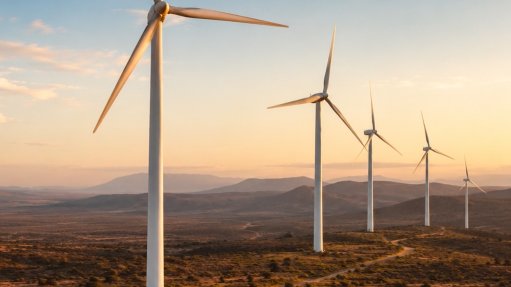
South Africa is in a relatively strong position to adopt such a model, owing to its natural advantages. For the immediate future, this includes domestic coal, but it also involves progressively harnessing the ‘golden renewables triumvirate’ of abundant solar, wind and land, which, owing to technology cost changes, have made renewables the cheapest sources of new electricity.
Once the electro-state vision is in place, the other elements of grid, storage and new market designs will become clearer and potentially less contested.
Besides making South Africa more energy secure, it will also lay the basis for a clear-eyed industrial strategy that prioritises the industrialisation of those components needed to implement the model, and to attract productive investments aligned to it.
Article Enquiry
Email Article
Save Article
Feedback
To advertise email advertising@creamermedia.co.za or click here
Research Reports

Projects

Latest Multimedia
Latest News

Showroom
Rentech provides renewable energy products and services to the local and selected African markets. Supplying inverters, lithium and lead-acid...
VISIT SHOWROOM
For over 15 years, Lilak Aluminium, a trusted leader in architectural extrusion supply, has delivered excellence to businesses like yours.
VISIT SHOWROOM
Press Office
Announcements
What's On
Subscribe to improve your user experience...
Option 1 (equivalent of R125 a month):
Receive a weekly copy of Creamer Media's Engineering News & Mining Weekly magazine
(print copy for those in South Africa and e-magazine for those outside of South Africa)
Receive daily email newsletters
Access to full search results
Access archive of magazine back copies
Access to Projects in Progress
Access to ONE Research Report of your choice in PDF format
Option 2 (equivalent of R375 a month):
All benefits from Option 1
PLUS
Access to Creamer Media's Research Channel Africa for ALL Research Reports, in PDF format, on various industrial and mining sectors
including Electricity; Water; Energy Transition; Hydrogen; Roads, Rail and Ports; Coal; Gold; Platinum; Battery Metals; etc.
Already a subscriber?
Forgotten your password?
Receive weekly copy of Creamer Media's Engineering News & Mining Weekly magazine (print copy for those in South Africa and e-magazine for those outside of South Africa)
➕
Recieve daily email newsletters
➕
Access to full search results
➕
Access archive of magazine back copies
➕
Access to Projects in Progress
➕
Access to ONE Research Report of your choice in PDF format
RESEARCH CHANNEL AFRICA
R4500 (equivalent of R375 a month)
SUBSCRIBEAll benefits from Option 1
➕
Access to Creamer Media's Research Channel Africa for ALL Research Reports on various industrial and mining sectors, in PDF format, including on:
Electricity
➕
Water
➕
Energy Transition
➕
Hydrogen
➕
Roads, Rail and Ports
➕
Coal
➕
Gold
➕
Platinum
➕
Battery Metals
➕
etc.
Receive all benefits from Option 1 or Option 2 delivered to numerous people at your company
➕
Multiple User names and Passwords for simultaneous log-ins
➕
Intranet integration access to all in your organisation